Silvia Calisaya - Aymara Healer from Lake Titicaca
“My grandmother was my first teacher; she was a healer and a midwife... I began to learn many things from her, including how to read coca leaves. I started looking for more information about the origin of coca leaves and why indigenous peoples still use them. In doing so, I discovered the philosophy of life of the Aymara people, who still live in this part of the world and continue to practice their traditional healing methods.”
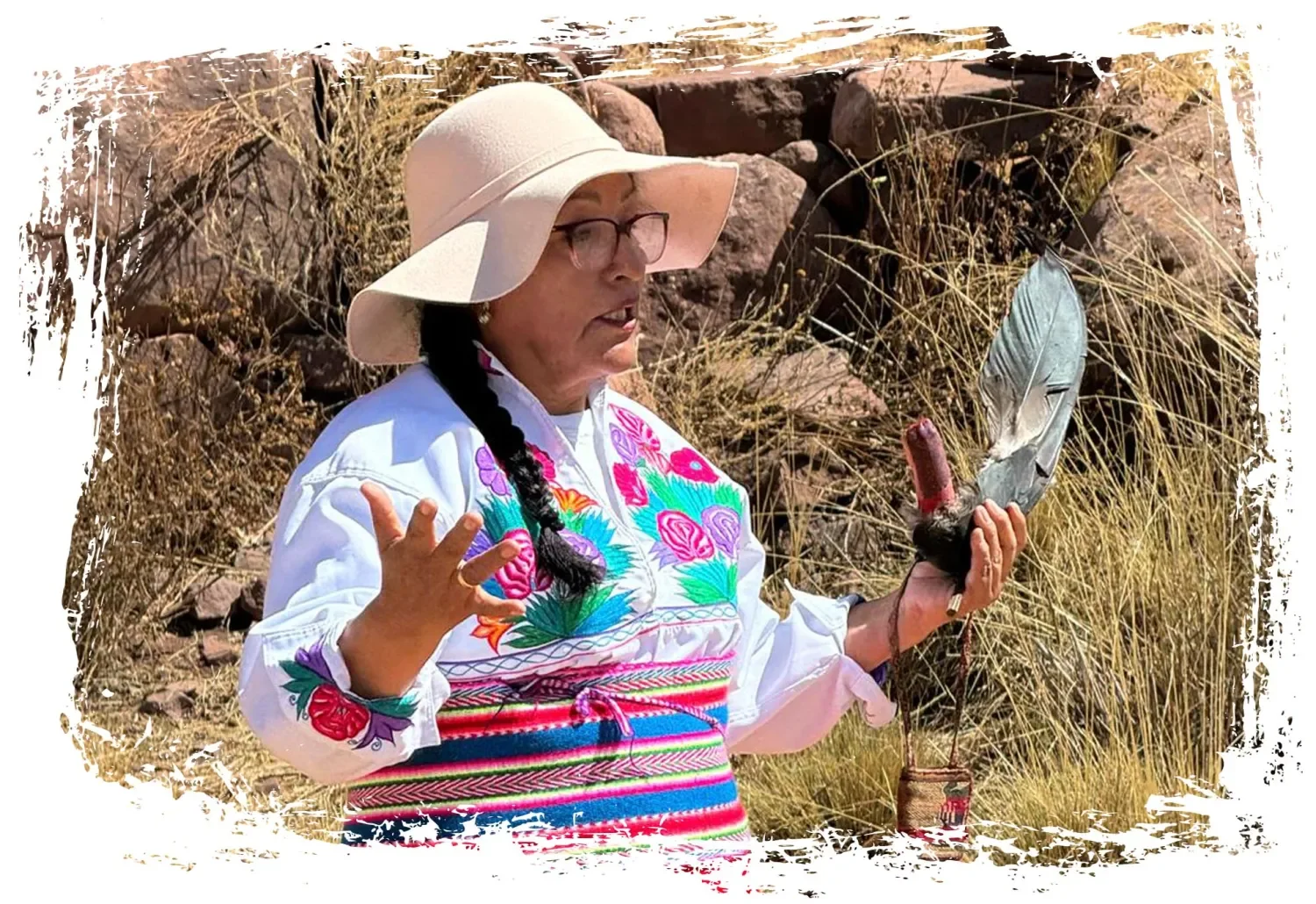
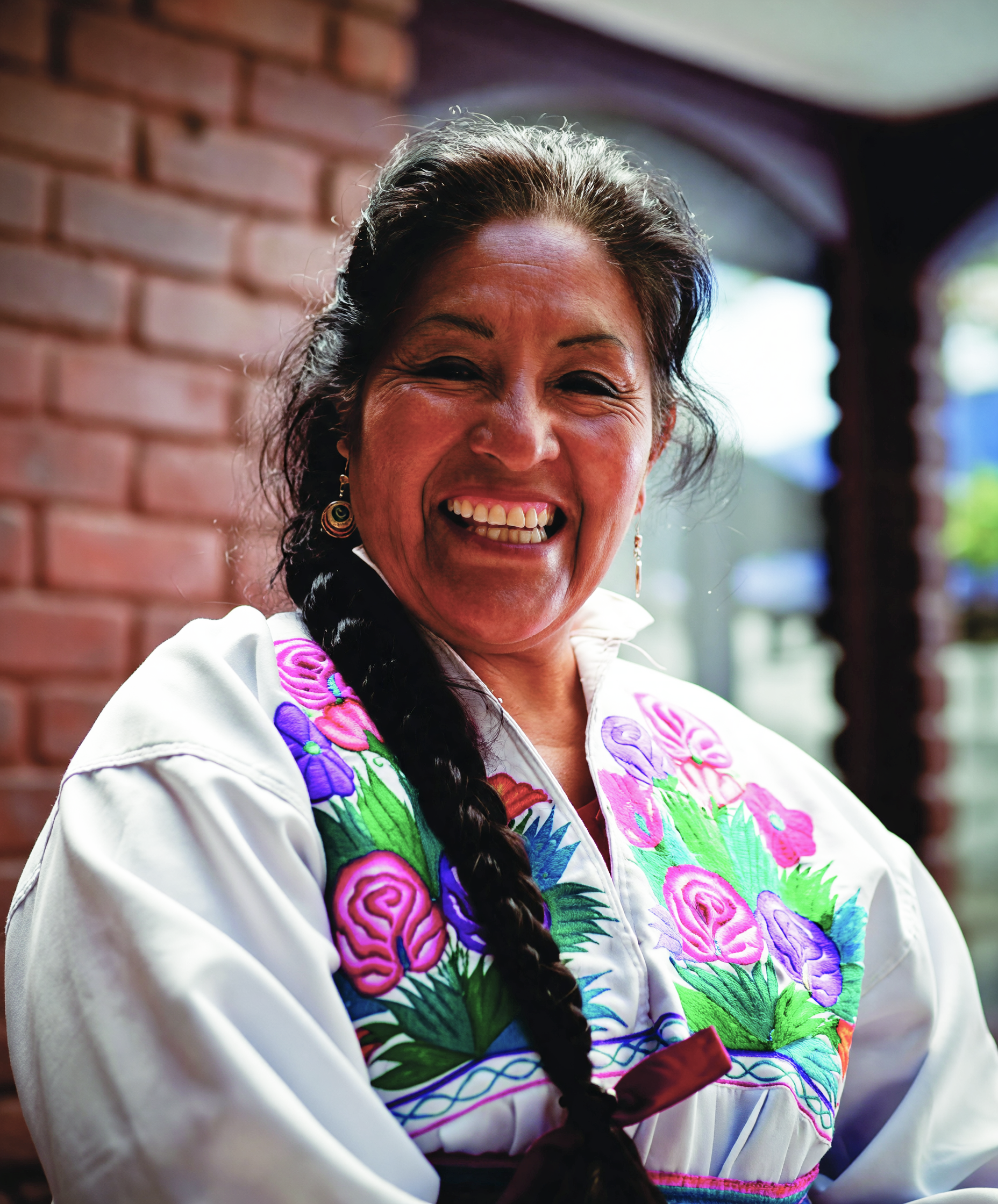
Silvia Calisaya Chuquimia (Mama Coca) is a traditional Aymara healer descended from the pre-Inca peoples who inhabit the southern region of Lake Titicaca. She was born and raised in a small village on the Altiplano; she left as a young woman to pursue her education and a professional career, and later returned to the traditional teachings of her people. She is an expert in the ancient art of reading coca leaves for divination and healing, and is the founder of the Coca Leaf Museum in Puno and this Kumara Taqui group in Peru.
Silvia is here to share the philosophy, teachings, and traditions of the Aymara people, as well as the history of this ancient people who still live in Peru.
Silvia has traveled to many places over the past 20 years, including Canada, the United States, the Netherlands, Belgium, Bulgaria, France, Spain, Sweden, Germany, Austria, Ireland, Iceland, Japan, South Korea, Taiwan, Argentina, Brazil, and Australia.
For information about a private healing session with Silvia, please contact us.
My name is Silvia Calisaya. I am the daughter of Aymara parents. I was born in Juli, known as the “Little Rome of the Americas,” located 79 km south of Puno. I am the fifth of 12 siblings, though currently there are nine of us. I spent my entire childhood with my mother among the llamas, alpacas, and sheep. I attended elementary and high school in Juli, but every weekend and during vacations I would always go to the countryside to tend to my animals, to a place high in the mountains we call Pasiri, located at 4,500 meters above sea level.
When I was 18, right after I finished high school, I left home and moved to Cusco. It was there that I learned English alongside my younger sister. Thanks to that, I am now an English teacher at Santa Rosa School in Puno, and I also work as a tour guide.
When I returned to Juli, I reconnected with my roots and came to appreciate my mother, my origins, and my history. That’s when I began to search for the reasons behind many things, and over time I found answers to many questions. That’s why I say now that my mother was my first university; I learned so much from her—I learned to see, to hear, and to feel my ancestors.
For over 30 years now, I have been guiding tourists and introducing them to my culture, and I have been teaching at my school for 25 years. Today, I carry within me that name which, for my ancestors, represented the most sincere meaning of Q’intuy—which means “Desire”—and which was expressed in many ways, honoring the entire philosophy of life that our ancestors held and that many people continue to practice.
Every time I stop to look at my homeland, I realize how lucky I am, lucky to have been born here and to be Aymara, to hear the echo of my ancestors’ voices in the Apus (Mountains), to eat what my Pachamama provides, to be protected by my mamacota (Mother Water), to blow and read my sacred coca leaves, and today I feel lucky to be here with you all and to be able to share this special moment.